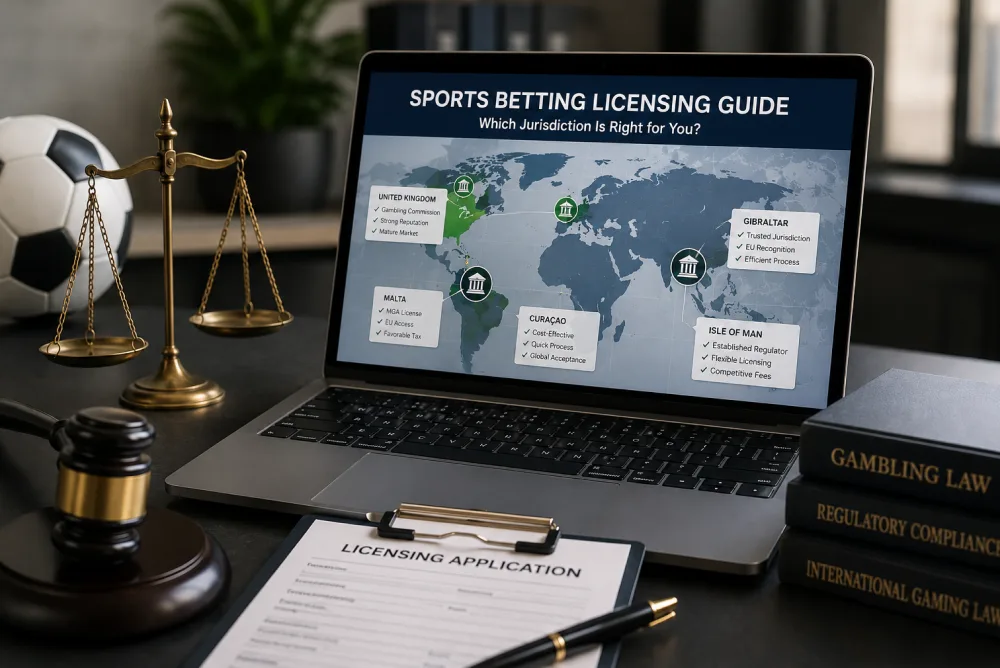
The best sports betting license jurisdiction depends on factors like target market, your budget, launch timeline, & compliance needs. Operators who prefer maximum credibility choose Malta (MGA) or the UKGC. On the other hand, startups often pick Curacao or Anjouan for faster market entry, approval & lower costs. No single license provides global market access.
Operating without a license or with the wrong one in the iGaming industry can lead to serious consequences for your sports betting business. The right sports betting license can help you to enter the regulated gambling industry. It enables you to offer your services to a broad audience while adhering to strict standards.
A valid license is proof that an operator meets all regulatory requirements, which include everything from fair gaming practices to responsible gambling measures. This protects players and also helps operators establish credibility in a competitive market.
But there is no one-size-fits-all licensing solution. Different businesses have different compliance needs, budgets, & growth objectives. In this guide, we will learn which license is best for your sports betting business, top sports betting licensing jurisdictions, compliance, etc.
Why Your Licensing Jurisdiction Is One of the Most Important Business Decisions You Will Make?
It is critical for you to understand online sports betting license requirements carefully, as it is far more about regulatory compliance.
Your choice of jurisdiction shapes various aspects of online sportsbook licensing, such as
- The markets you can legally serve
- Payment processors, you can partner with
- Affiliates you work with
- Banking partners
Choosing the wrong jurisdiction can lead to the following.
- Increased operational costs
- Delayed launch timelines
- Restricted access to key markets
As per stats, operating an unlicensed sports betting business can attract penalties of up to $250,000.
But, there is no one-size-fits-all licensing solution. Based on the compliance needs, budgets, and growth objectives, there will be different needs for a startup operator, a scaling sportsbook, and a crypto-native betting platform.
Note: There is no single gambling license for sports betting that provides unrestricted global access. As regulations become more stringent and strict, various successful operators are adopting multi-licensing strategies to expand into other regulated markets.
Ready to Choose the Right Sports Betting License?
Key Factors to Evaluate Before Choosing a Jurisdiction
Choosing the right jurisdiction is a strategic task. There are six factors that need to be analyzed to ensure that the chosen jurisdiction aligns with your business goals & growth strategy.
1. Target Market Access
The first thing is to ensure that you pick a license for the jurisdiction where you plan to operate.
- Some jurisdictions support EU markets.
- Others are best suited for the UK, LatAm, or crypto-focused global audiences.
2. Total Cost of Licensing (Year 1)
When calculating cost, look beyond the application fees. The cost of a sports betting license can go over millions of dollars, including the cost related to the following.
- Compliance consulting
- Minimum capital requirements
- Audits
- Legal support
- Annual regulatory costs
3. Time to Approval
If your goal is to launch faster, the choice of your license varies. From as little as 30 days in Anjouan to more than 12 months under the UKGC, the timeline varies, and you need to pick based on your requirements. Delays can impact launch plans & revenue projections.
4. Payment Processor Acceptance
If you go for higher-tier licenses, such as
Or any other, you can generally enjoy stronger banking and payment processor support than offshore alternatives.
5. Compliance Infrastructure Required
Some regulators require advanced AML monitoring, player risk assessments, and segregated player funds from day one.
6. Reputation & Affiliate Ecosystem
License credibility influences a number of aspects, such as
- Player trust
- Affiliate partnerships
- Customer acquisition opportunities
Stronger jurisdictions often provide a long-term competitive advantage.
Top Sports Betting Licensing Jurisdictions Compared
Here are the most widely used jurisdictions for online sports betting operators globally, ranked from most prestigious to most accessible.
| Jurisdiction | Regulator | Est. Year-1 Cost | Approval Time | Best For |
|---|
| UK (UKGC) | UK Gambling Commission | £50k to £150k+ | 12 to 16 months | UK market access, credibility-first operators |
| Malta (MGA) | Malta Gaming Authority | €700k to €850k (all-in) | 6 to 12 months | EU market, institutional-grade operators |
| Gibraltar | Gibraltar Gambling Commission | £30k to £80k | 3 to 6 months | EU/UK bridge, crypto-friendly sportsbooks |
| Isle of Man | Gambling Supervision Commission | £20k to £50k | 4 to 6 months | Established operators, tech-forward businesses |
| Curacao | Gaming Control Board (GCB) | $15k to $40k | 1 to 3 months | Startups, crypto-first and global operators |
| Anjouan | Anjouan Betting & Gaming Board (ABGB) | $10k to $20k | 1 to 2 months | Fast-launch projects, MVP testing |
Note: The cost figures and timelines mentioned in the table are just estimations and not exact numbers. These can change based on application complexity, business requirements, and jurisdictional changes.
The Hybrid Licensing Strategy | What Smart Operators Do
Not all, but most of the operators no longer view licensing as a one-time decision. Therefore, they implement a hybrid licensing strategy.
This includes
- Launch under a faster, lower-cost jurisdiction such as Anjouan or Curacao to validate their product
- Once you have acquired players and generated revenue, operators can go for a premium license like the MGA or UKGC.
This approach eliminates upfront risk while securing future expansion opportunities.
With business maturity, operators can add a gambling license for sports betting based on target markets. This helps them create a licensing portfolio that supports growth, compliance, & market access.
What Licensing Means for Players | Why It Matters to You
For players, a sportsbook license is more than a regulatory formality. It is an important indicator of trust & legitimacy.
Licensed operators must comply with these rules, which are designed to
- Protect player funds
- Promote fair gaming
- Safeguard personal data
Besides this, licensing also provides a path for dispute resolution. If an issue cannot be resolved directly with an operator, players may be able to escalate complaints to approved dispute resolution bodies, such as
- eCOGRA
- IBAS
- Regulator-appointed ADR services
Ultimately, a valid license signals that the operator is accountable to an independent authority and subject to ongoing oversight.
Conclusion
Picking the right sports betting license jurisdiction is a strategic move from a business owner that impacts their market access, compliance burden, & long-term profitability. From UKGC & MGA for credibility and regulated expansion to Curacao & Anjouan for faster market entry, each licensing option serves a different operator profile.
The most successful operators treat licensing as part of a broader growth strategy than just a legal requirement. As global regulation tightens, multi-licensing & structured compliance planning are becoming standard practice in online sportsbook licensing.
Selecting the right jurisdiction early can significantly reduce costs, prevent operational delays, and improve investor and player trust across markets. We at TIG Sportsbook offer expert licensing assistance to sports betting operators, no matter where they want to operate. Contact us to learn more!
Need Help Selecting the Best Licensing Jurisdiction?