Sportsbook software works via a network of interconnected systems. These systems manage odds feeds, bet processing, risk management, player accounts, payments, & settlement in real time. This guide explains the complete sportsbook software architecture that shows how sports betting platforms validate wagers, track exposure, process transactions, & deliver seamless betting experiences at scale.
The backend of the sportsbook software is more complex than it looks. What seems to be a simple tap on the screen for the bettor, in the background, is the architecture where a sportsbook wager is accepted, the platform validates the odds, assesses risk exposure, updates the player’s wallet balance, records the transaction, and eventually settles the bet.
This is a complex network of interconnected technologies that works behind the scenes in milliseconds. In this guide, you will see the non-technical, under-the-hood overview of how sportsbook software works and how its core components fit together.
The key benefit here is: Understanding sportsbook architecture can help you evaluate providers more effectively.
The Front-End Layer: What Players Actually See
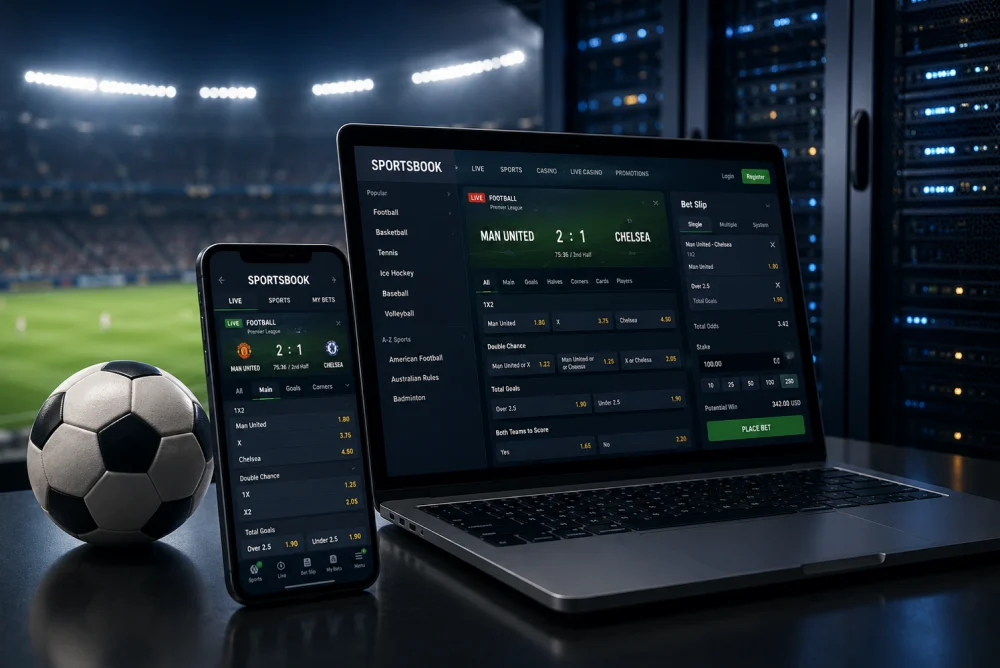
The front-end layer is the part of the sportsbook that players interact with directly. It can happen via
- A web platform
- Mobile app
- Retail betting kiosk
While these user interfaces may look different, they typically connect to the same underlying sportsbook infrastructure & services.
For a sportsbook software, the most important front-end need is real-time and faster data delivery. Today, modern sportsbooks use technologies like WebSockets to push live odds updates instantly to user screens. Without this capability, players would need to refresh pages manually, which results in
- Delayed odds
- Poor user experience
- Increased bet rejection rates
To improve speed & performance of the sportsbook, several static assets are delivered through a Content Delivery Network (CDN). This asset delivery system helps reduce load times across regions. Some of these static assets include
- Banners
- Event schedules
- Images
- Promotional content
Beyond key functionalities, the front end of your sportsbook is also a brand layer. Navigation, bet-slip design, onboarding flows, & overall user experience directly influence player engagement, retention, & conversion rates.
Ready to Build a High-Performance Sportsbook Platform?
The Odds & Data Feed Layer: The Sportsbook’s Heartbeat
If the front end is what players see, the odds and data feed layer is the heartbeat. The markets that sportsbook operators list depend a lot on the odds and data feed that the sportsbook receives.
There are several types of data that sports betting software ingests, such as
- Match schedules
- Scores
- Player statistics
- Market data
- Betting odds
These data elements are provided by several reputed operators, like SportsRadar, LSports, etc.
Odds data can be of two types,
Live Odds: These odds are updated on a sub-second, faster basis & need to be updated continuously as the event unfolds. A goal, red card, injury, or timeout delay can instantly change market probabilities, which makes sub-second data delivery critical for accurate pricing and risk management. These are best for micro-betting.
Pre-match Odds: These odds can be updated minutes or even hours later (based on the nature of the game), as these are for long-term outcomes (end result of the game).
Note: Sportsbooks need to ensure absolute reliability by fetching data from multiple providers. If you are accessing data from one provider, there is a single point of failure that can affect platform uptime if anything goes wrong.
The Pricing & Trading Engine: Where Margin Is Made
After the odds and data layer comes the pricing and trading engine. This is the system where sports odds and data are fetched, and markets are created.
Once the odds are received from the data providers or internal models, the sportsbook applies a margin to create a built-in profit opportunity over the long term. This margin is known as the vig or overround.
In plain terms, the vig slightly adjusts the true probabilities so that the combined implied probabilities exceed 100%. This difference represents the sportsbook’s theoretical edge or profit on a market.
Note: Today, operators are increasingly relying on automated pricing systems that continuously adjust odds based on incoming data, betting activity, & risk exposure. But, many sportsbooks still have a trading team that can manually intervene, suspend markets, or override prices during unusual situations.
The Bet Engine & Risk Management Layer
This is the layer where bets are checked, and risks are assessed and eliminated. When a player submits a bet, the system instantly
- Verifies that the selected odds are still available
- Confirms stake limits
- Checks account status
- Validates any market-specific rules
Only after these checks pass is the wager officially recorded.
Besides this, the layer’s risk management aspect continuously monitors exposure across players, markets, events, and even entire sports. In case any disproportionate amount of money accumulates on one outcome, the system can automatically adjust odds, lower stake limits, or trigger alerts for traders.
In the case of live betting, these sportsbook platform components suspend affected markets until new odds are generated. This helps in preventing bets from being accepted at outdated prices.
Player Account Management (PAM), Wallet & Payments
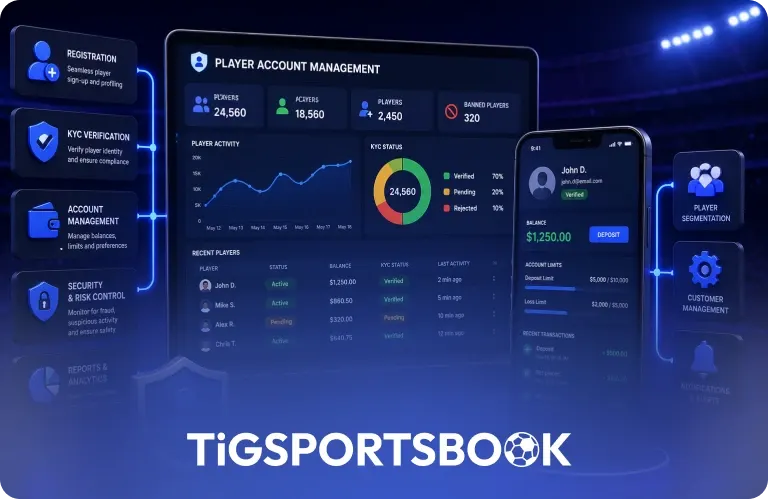
By far, the most important system of the sportsbook software architecture. PAM, or player account management, is a system that stores a lot of user information, such as
- Player profiles
- Account preferences
- Betting history
- Responsible gambling settings
- Balance information
- Compliance data, like KYC and identity verification status
With control of all this, the system acts as a single source of truth.
This Sportsbook PAM system is also connected to the user’s wallet. It enables easy tracking of every deposit, withdrawal, wager, payout, bonus credit, & adjustment as a separate transaction. Rather than a simple balance counter, it offers a complete financial audit trail.
Related to the wallet are the payment methods. For smooth operations and customer experience, sportsbooks integrate with
- Multiple payment gateways
- Banking providers
- E-wallets
- Cryptocurrency payment solutions
Back Office: The Operator’s Control Room
While players interact with the front-end UI, operators manage the sportsbook through the back-office platform. This is the key part of how sportsbook software works, where trading teams, risk managers, compliance officers, & administrators monitor and control day-to-day operations.
Live dashboards provide real-time visibility into key metrics, such as
- Liability exposure
- Gross Gaming Revenue (GGR)
- Betting volume
- Active users
- Player activity
These insights assist operators identify trends, manage risk, & make informed trading decisions. The back office also includes operational controls that enable teams to suspend markets, adjust stake limits, or manually override odds when unusual circumstances arise.
How These Sportsbook Platform Components Connect | A Simplified Data Flow Example
Walk through one bet end-to-end in plain language
Why Sportsbook Software Architecture Matters When Choosing a Provider?
Understanding a sportsbook’s architecture is not just about deciding whether to build all of these systems yourself. It is more about whether a provider’s architecture can support
- Business growth
- Regulatory requirements
- Peak betting demand
Major sporting events can generate thousands of odds updates, bet requests, & wallet transactions every second. A well-designed platform must remain stable under these loads while maintaining fast performance, accurate risk controls, & compliance readiness across jurisdictions.
When evaluating vendors, look beyond front-end features & marketing claims. The underlying architecture ultimately determines scalability, uptime, operational efficiency, and long-term profitability.
Conclusion
Sportsbook software is more than a single application. It is a network of specialized systems, including
- Data feeds
- Pricing engines
- Risk management tools
- PAM platforms
- Wallets,
- Settlement services
- Back-office controls
And more, all working together in real-time to process every wager accurately & securely.
For operators, success depends less on understanding every technical detail. But it depends more on choosing a provider with an architecture built for performance, scalability, compliance, and growth.
If you are evaluating sportsbook technology, explore TIG Sportsbook’s software architecture or book a demo to see how these components come together in a production-ready platform.
Build, Scale, and Optimize Your Sports Betting Business