In the current betting industry, acquiring customers & retaining them means everything for operators. If you have a loyal player base but still manage bets manually or rely on outdated software, choosing the right platform is your next critical decision to make.
However, this decision often comes down to two models.
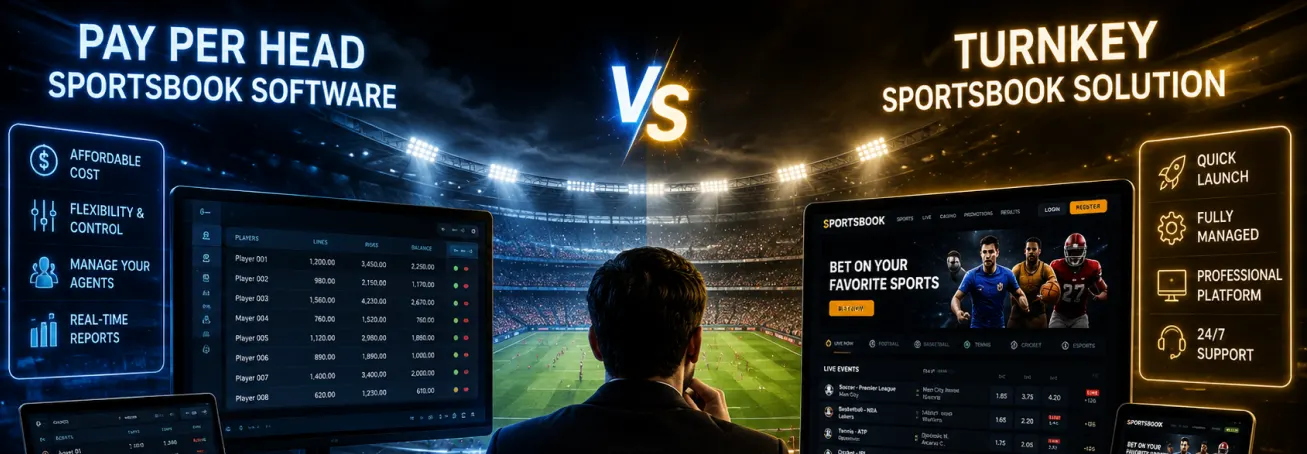
Pay Per Head (PPH) sportsbook software, where you rent the infrastructure and pay per active player, or a Turnkey Sportsbook, where you launch a fully branded platform under your ownership.
If you are in the same situation where opting for any one option has become difficult, this guide will help you with it.
What Is Pay Per Head Sportsbook Software?
A pay per head sportsbook software (PPH) is a managed service that allows bookmakers to run an online sportsbook without owning or maintaining the underlying technology.
Instead of purchasing a platform, the bookmaker pays a fixed weekly fee that is typically between $5 & $25 per active player. All of this while the PPH provider manages
- The backend infrastructure
- Hosting
- Security
- Platform updates
Most pay per head sportsbook software includes the following features:
- Live odds
- Automated bet grading
- Line management
- Agent and sub-agent controls
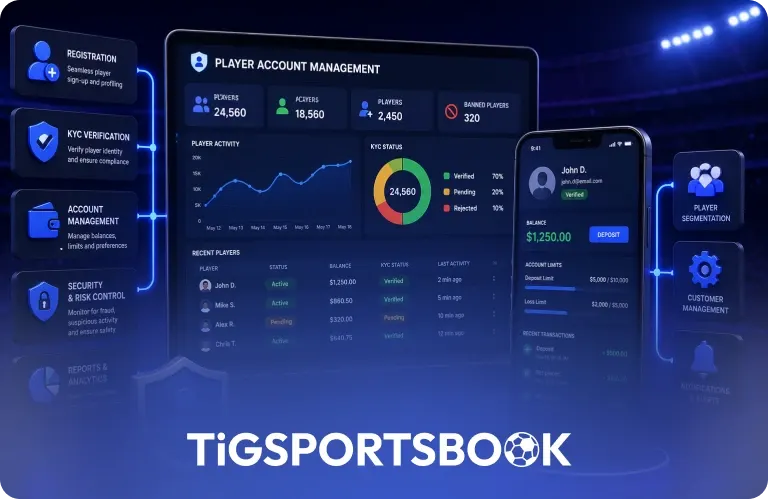
- Player account management
- Reporting dashboards
And more. This makes it the best sportsbook software for independent bookmakers who want to digitize their operations without investing in expensive infrastructure or technical teams.
Best For: If you are an operator managing anywhere from 10 to 500 active players, PPH enables a fast launch while keeping the PPH sportsbook cost per week predictable and directly tied to business activity.
Quick Definition: PPH sportsbook software is a managed weekly service where the provider operates the platform and the agent manages players, paying only per active head.
What Is a Turnkey Sportsbook?
A turnkey sportsbook is a fully deployed betting platform that gives operators everything they need to launch under their own brand without developing software from scratch.
As compared to the Pay Per Head model, where the provider owns and manages the platform, a turnkey sportsbook for bookmakers provides a complete business infrastructure that typically goes live within 3 to 6 weeks.
A modern turnkey solution includes
- A branded frontend
- Sportsbook backend
- Player Account Management (PAM)
- Real-time odds feeds
- Risk management tools
- Payment gateway integrations
- Multi-currency wallets
- KYC/AML compliance
- A comprehensive back-office for managing players, markets, and operations
This allows operators to focus on customer acquisition and business growth instead of technical development.
Best For: A turnkey sportsbook is best suited for operators planning to
- Run a licensed betting brand
- Expand beyond agent-level operations
- Scale across multiple markets
All this while maintaining greater control over their platform, operations, and long-term profitability.
Ready to Choose the Right Sportsbook Model for Your Business?
Pay Per Head Sportsbook Software Vs. Turnkey | Head-to-Head Comparison
If you are evaluating pay per head sportsbook software vs. turnkey sportsbook, keep in mind that the right choice depends on your business goals, available budget, & growth plans.
While PPH reduces the upfront investment & gets you online quickly, a turnkey sportsbook gives you complete control over your platform & brand.
The comparison below highlights the key differences.
| Factor | PPH Software | Turnkey Sportsbook |
|---|
| Launch Time | 24 to 72 hours | 3 to 6 weeks |
| Upfront Cost | Low ($5 to $25 per active player/week) | $30K to $150K+ setup |
| Platform Ownership | None (Rented access) | Full operator ownership |
| Customization | Branded interface with limited backend control | Full frontend, backend, and integration control |
| Best For | Agents, local bookmakers, and independent bookmakers | Licensed operators and scaling sportsbook brands |
Note: The PPH vs. turnkey sportsbook decision isn’t about which model is universally better. It’s about choosing the one that matches your current stage of growth.
When Should You Choose a PPH and a Turnkey Sportsbook?
The choice between pay per head sportsbook software and a turnkey sportsbook depends on where your bookmaking business is today & where you plan to take it.
PPH Software Makes Sense
If you already have an active player base and want to move online quickly without a major upfront investment.
With predictable PPH sportsbook costs per week, you avoid five-figure setup fees while the provider manages hosting, platform maintenance, and infrastructure.
It’s ideal for independent bookmakers who want to
- Launch within 24 to 72 hours
- Test the market
- Grow gradually before committing to platform ownership
TIG Sportsbook’s PPH solution launches within 24 hours, offers full branding, and comes with no revenue-sharing model.
Turnkey Sportsbook Software Makes Sense
When you are building a licensed sportsbook brand designed for long-term growth.
It includes the
- Compliance
- KYC/AML tools
- Risk management
- Back-office capabilities needed to operate in regulated markets
If you are targeting over 500 active players, expanding into multiple jurisdictions, and want to eliminate ongoing per-head fees in favor of owning your platform, a turnkey solution offers greater control & scalability.
TIG Sportsbook’s turnkey platform goes live in as little as four weeks, with full ownership and no revenue share.
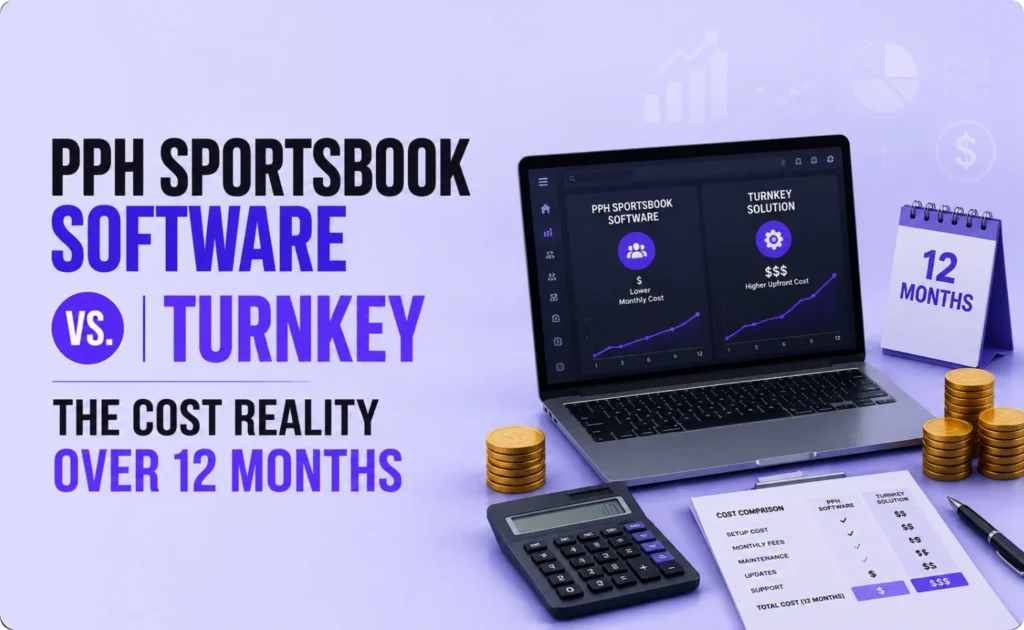
PPH Sportsbook Software vs. Turnkey | The Cost Reality Over 12 Months
The biggest difference between PPH vs. turnkey sportsbook isn’t just the launch time. It’s total cost over the first year.
PPH Software
Assume a Pay Per Head sportsbook charges $10 per active player per week.
With 100 active players, your annual cost is approximately $52,000 (100 × $10 × 52 weeks). Here, there are
- No platform setup fees
- Hosting expenses
- Infrastructure costs
This makes PPH the more affordable option for smaller operations.
Turnkey Software
A turnkey sportsbook, by comparison, typically requires
- A $30,000 to $150,000 deployment fee
- $5,000 to $25,000 per month for platform services, odds feeds, maintenance, & related operating costs
Depending on the provider and feature set, the first-year investment generally falls between $120,000 and $400,000+.
The takeaway: The PPH sportsbook software wins on Year 1 affordability. But, for business scalability, a turnkey sportsbook becomes more financially attractive.
For many operators, the crossover point is around 500+ active players, where platform ownership, fixed operating costs & improved margins begin to outweigh per-head pricing.
Which Model Does TIG Sportsbook Offer?
TIG Sportsbook supports both business models because the right choice depends on your current stage, not a one-size-fits-all sales approach.
It’s Pay Per Head sportsbook software
- Enables a fully branded launch within 24 hours
- Offers competitive per-head pricing
- Includes 24/7 technical support with no revenue-sharing requirements
For operators ready to build a licensed sportsbook business, TIG’s turnkey sportsbook solution delivers
- Full platform ownership
- Deployment in as little as four weeks
- No revenue
- Support for operators across 20+ jurisdictions
Both solutions run on the same core infrastructure, allowing operators to migrate smoothly from PPH to a turnkey platform as their player base and business grow.
Book a demo today to determine which sportsbook model best fits your current stage.
Choose a Sportsbook Platform That Matches Your Business Goals