In the current sports betting landscape, choosing the right sportsbook software providers starts with evaluating platform reliability, compliance readiness, scalability, and the depth of features they offer.
As the global iGaming and sports betting market continues to surge (valued at $187.39 billion by 2030), the competition among operators is intensifying. In this fast-moving environment, the wrong provider can lead to poor odds performance, limited market coverage, and inadequate support, ultimately impacting revenue and user retention.
This guide walks you through the different types of sportsbook solutions, the key factors to evaluate, critical red flags to avoid, and what separates top-tier sportsbook platform providers from the rest.
Leading sports betting software providers deliver far more than a betting UI. They provide a complete, revenue-ready ecosystem designed to launch and scale operations efficiently. The best sports betting platform providers combine multiple core components into a single, seamless solution, including
Top sportsbook platform providers act as full-stack partners, offering ongoing support, updates, and strategic guidance, not just software deployment.
As you explore providers, it’s essential to understand how these capabilities vary across bespoke, turnkey, and white-label sportsbook solutions, which we’ll break down next.
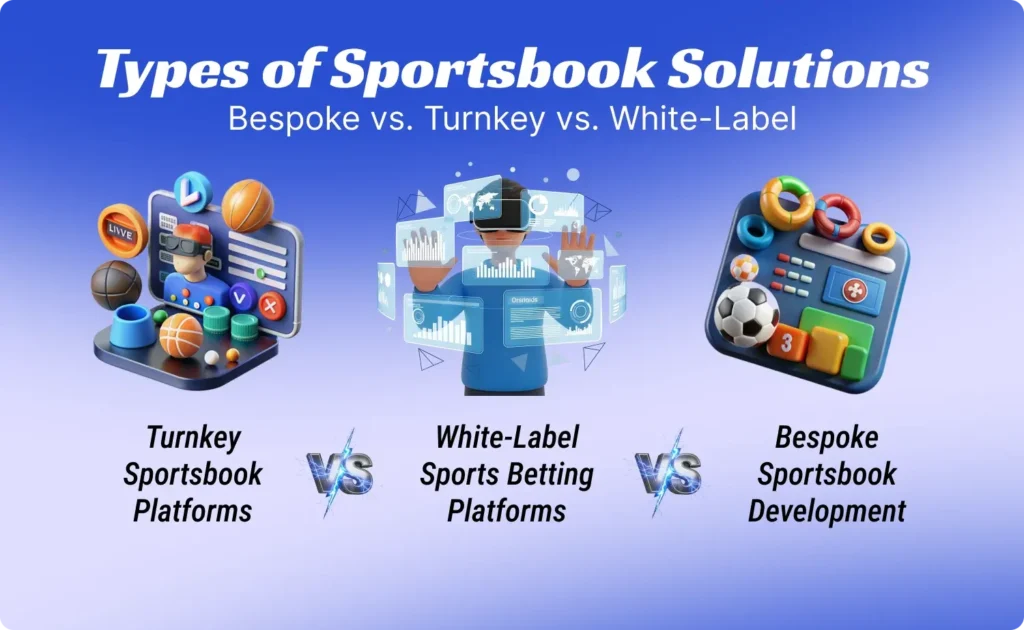
Not all sportsbook software providers offer all types of sportsbook solutions, and not all of them have the best one. Therefore, choosing between different solution models is one of the most critical decisions when evaluating sportsbook software providers.
Each option varies in cost, control, speed, and scalability, making it essential to align your choice with your business goals and resources.
A bespoke sportsbook solution is a fully custom-built platform designed from the ground up to meet specific business requirements. It offers complete control over
This approach is ideal for operators with a unique product vision or those targeting highly competitive, regulated markets. However, it comes with higher development costs and a longer time-to-market.
Enterprise operators often prefer this model for long-term scalability and differentiation.
Turnkey solutions provided by sports betting platform providers are ready-to-launch systems that include everything needed to go live, such as
These platforms significantly reduce development time, enabling operators to launch within weeks instead of months. While not as customizable as bespoke builds, they offer a strong balance between flexibility, cost-efficiency, and speed.
This makes them a popular choice for startups and mid-sized operators entering the market.
White-label platforms provide pre-built infrastructure where operators can apply their branding and go live with minimal technical involvement. Typically offered on a revenue-share or subscription basis, they are ideal for affiliates, influencers, or new entrants testing the market.
While quick to launch, they offer limited customization and less operational control compared to other models.
Comparison Table
| Factor | Bespoke | White-Label | Turnkey |
|---|---|---|---|
| Cost | High | Low | Medium |
| Time to Launch | 6 to 8 months | 2 to 4 Weeks | 4 to 8 Weeks |
| Customization | Full | Limited | Moderate |
| Ownership | Full IP ownership | None | Partial |
| Ideal User | Enterprises | Affiliates/Newbies | Startups/SMEs |
If you are selecting the right partner from a crowded field of sportsbook platform providers, you would require a require a structured evaluation of their core capabilities. The best sports betting software providers combine compliance, performance, and flexibility to support long-term growth.
A reliable provider must support operations across regulated markets such as
And more. Besides, built-in AML and KYC tools are essential to streamline verification and reduce compliance risk. Without strong regulatory alignment, expansion into new markets becomes difficult and costly.
Look for platforms that offer extensive coverage across global sports, esports, and niche betting categories. A deeper range of betting markets can enhance user engagement and retention. You can add markets such as
More options translate directly into higher betting activity.
High-quality odds feeds with real-time updates are critical for competitive positioning. Low-latency live betting ensures users can place bets instantly during events, improving user satisfaction. Reliable feeds also reduce discrepancies and trading risks.
Advanced back-office systems provide operators with full control over player activity, reporting, and operations. Moreover, certain features help protect margins, such as
You can explore robust sportsbook software solutions that include built-in risk management for better operational efficiency.
Modern platforms must support multiple payment methods, including fiat currencies, e-wallets, and cryptocurrencies. Fast deposits and withdrawals significantly improve user experience and trust. Flexible payment integrations also help operators expand into diverse markets.
A mobile-first approach is no longer optional; it’s essential. Seamless navigation, fast loading times, and intuitive design directly impact conversion rates and session duration. A poor mobile experience can lead to immediate user drop-offs.
Your platform should be able to handle traffic spikes during major sporting events without performance issues. API-driven architecture allows easy integration with
Scalability ensures that your business grows without technical limitations.
Not all providers deliver what they promise. Identifying early warning signs can save you from costly mistakes and operational setbacks.
Adopting a cautious, detail-oriented approach during vendor evaluation helps protect your investment and ensures long-term stability.
The difference between average and top-tier sportsbook software providers lies in their ability to deliver performance, reliability, and long-term scalability.
The best providers don’t just offer software, they act as long-term partners invested in your growth.
If you are exploring options, reviewing top sportsbook software providers can help you benchmark capabilities and identify a solution that aligns with your operational and strategic goals.
Choosing the right sportsbook software providers comes down to aligning technology with your long-term business goals. From understanding the differences between bespoke, turnkey, and white-label solutions to evaluating critical factors like compliance, scalability, and user experience, every decision directly impacts your platform’s success.
Moreover, avoiding common red flags and focusing on proven capabilities ensures stronger ROI, smoother operations, and sustainable growth.
If you are ready to take the next step, explore TIG Sportsbook advanced sportsbook software solutions or speak to our team for a personalized consultation. Whether you’re launching a new platform or upgrading an existing one, the right partner can make all the difference. Book a demo to learn more about your offering and discuss your requirements.
When evaluating sportsbook software providers, focus on compliance, scalability, and performance. The ideal provider offers real-time odds, strong risk management tools, reliable uptime, and dedicated support to ensure long-term operational success.
Final cost depends on features, integrations, and market scope.
Turnkey solutions are ideal for faster launches with lower upfront costs, while bespoke platforms offer full customization and scalability. The right choice depends on your budget, timeline, and long-term business strategy.
Timelines vary based on complexity and customization needs
Most established providers support licensing and compliance processes, including KYC and AML integrations. However, the level of support varies, so it’s important to confirm jurisdiction-specific capabilities before choosing a provider.
Yes, most modern sportsbook platforms support cryptocurrency payments alongside traditional methods. Crypto integration enables faster transactions, supports global users, and enhances overall payment flexibility and user experience.