What is PAM in iGaming?
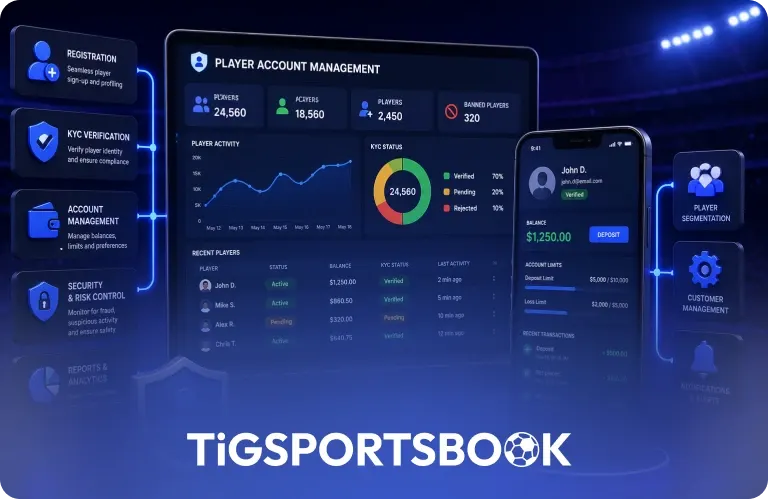
Sportsbook PAM software, or the sportsbook Player Account Management system, is the centralized back-office system that manages every player-facing operation on a sports betting platform. This includes everything from registration, KYC verification, and wallet management through bonus allocation, fraud detection, and regulatory compliance enforcement, all from a single operator-controlled interface.
Today, when an operator begins their sports betting journey, their primary focus is on odds feeds, risk management, and front-end design. It is agreeable that these are important elements, but not more than sportsbook PAM software. Operators treat the player account layer as something they will figure out after launch, a back-office concern rather than a foundational one.
This assumption costs operators as they figure out issues faster, including compliance workflows breaking down, player onboarding stalling, wallets not reconciling cleanly under live-event load, and every fraud or bonus abuse incident requires manual intervention.
For a sportsbook, the PAM isn’t a feature you add. It’s the infrastructure that makes a sportsbook operationally viable. Let’s read ahead and break down the player account management sportsbook in detail.
What Sportsbook PAM Software Actually Does?
At its core, a sportsbook PAM manages five distinct functions that determine whether a betting platform runs cleanly or creates compounding operational debt.
Player Lifecycle Management
The player management on a sportsbook begins way before the first bet is placed. PAM handles
- Registration
- Automated KYC checks
- Identity verification
- Age and location validation
- Account activation
In a well-configured sportsbook system, this sequence is fully automated and jurisdiction-configurable. An operator launching in multiple markets doesn’t rebuild the onboarding flow for each one. The PAM applies the correct rule set at the account level based on where the player is registering.
Wallet and Balance Management
This is where most generic solutions create real problems for sportsbook operators. You see, real-money funds, free bet credit, pending withdrawals, and crypto holdings can’t share a single ledger without creating reconciliation errors. This usually happens during high-volume live events when thousands of bets are being placed & settled simultaneously.
A sportsbook PAM maintains all of these as separate ledgers. This allows for independent tracking and configurable rules governing how each balance type can be used and withdrawn.
Compliance Enforcement
A PAM software for sports betting operators ensures that compliance runs continuously, not just at onboarding.
Several aspects are configured once in the PAM’s compliance engine and enforced automatically across every player action, such as
- AML thresholds
- Responsible gambling controls
- Deposit limits
- Session limits
- Staking velocity monitoring
- Self-exclusion mechanisms
For regulated markets, this removes manual compliance overhead & significantly reduces the regulatory exposure that comes from inconsistent enforcement.
Bonus and Promotions Management
In the sportsbook context, bonus and promotions management is operationally more complex than in a casino environment. Aspects like
- Free bet triggers
- Minimum odds requirements
- Market eligibility rules
- Wagering progress tracking at the individual account level
need to be managed natively and not approximated.
Fraud Detection
In a sportsbook, fraud detection operates at the account level and in real time. A sportsbook PAM monitors behavioral signals, such as
- Shared device IDs
- IP address clustering
- Payment method overlaps across accounts
This helps in flagging multi-accounting and bonus abuse before payouts are processed rather than after.
Ready to Power Your Sportsbook With a Modern PAM Platform?
Sportsbook PAM vs. Generic iGaming PAM: What’s the Difference?
This is the question most operators don’t think to ask until they have already committed to the wrong vendor.
Was this PAM built for sportsbook operations, or was it built for casino and then adapted?
The distinction matters because the operational logic of sports betting is fundamentally different from casino gaming.
- A casino PAM is optimized for spin-cycle session behavior.
- Transaction flow maps to game rounds with fixed settlement patterns.
- Compliance triggers are relatively straightforward, including session duration, deposit limits, and loss thresholds.
A sportsbook introduces operational complexity that the casino PAM infrastructure simply wasn’t designed to handle.
- Live in-play betting generates continuous, real-time session events rather than discrete game rounds.
- Bet settlement depends on external event outcomes, not internal RNG results. This means that the PAM must integrate with data feed settlement logic and reconcile wallets across hundreds of concurrent markets on the same event.
- Staking velocity monitoring during a live match is a different technical & compliance problem than monitoring a player’s spin frequency in slots.
The compliance engine gap is particularly significant. Responsible gambling obligations for sports betting include
- Specific requirements around in-play session behavior
- Same-event parlay risk
- Staking pattern detection
The key evaluation question for any PAM vendor.
Was the compliance engine and wallet architecture designed around sportsbook operational logic from the start, or was it adapted from a casino infrastructure?
Note: When evaluating vendors, operators should request specifics about how the PAM handles in-play session events, concurrent live-event wallet reconciliation, and staking velocity monitoring. Vague answers to those questions typically indicate casino-derived architecture.
Core Sportsbook PAM Software Features
Understanding what a PAM does is critical. It helps you understand what capabilities a sportsbook PAM must include before you commit to a vendor.
1. The KYC and Compliance Engine
The PAM software needs to cover
- Document verification
- AML screening
- PEP and sanctions checks
- Responsible gambling enforcement
It needs to run these checks continuously throughout the player lifecycle, not just at registration. Jurisdiction-specific rule sets should be configurable independently per market, not applied as a single global policy.
2. Multi-wallet Architecture
This is a non-negotiable feature for sportsbook operations. Real money, free bet credit, pending withdrawals, and crypto holdings each need independent ledger tracking.
Every credit and debit is a financial event requiring an immutable record and a complete audit trail. ACID compliance at the transaction level is the baseline feature to have.
3. The Fraud Detection Layer
This feature must go beyond basic transaction monitoring. Behavioral analysis at the account level must include
- Flagging shared device IDs
- IP clusters
- Payment method overlap in real time
This separates a PAM that actually prevents bonus abuse and multi-accounting from one that logs it after the fact.
4. Bonus and CRM Tools
These tools in a PAM handle free bet triggers, enhanced odds offers, and market eligibility rules as configurable parameters, not as workarounds using generic casino promotion logic.
Player segmentation for retention campaigns should run from within the PAM without requiring data exports to a separate CRM platform.
5. Reporting and BI Dashboard
With these features, operators get real-time visibility across
- Player acquisition rates
- Deposit volumes
- Withdrawal patterns
- Bonus redemption
- Churn indicators
- Compliance status
Separate views for finance, compliance, and marketing teams operating on the same data set are operationally important at scale.
6. Multi-brand and Multi-jurisdiction Support
This is one of the sportsbook PAM software features that matters from day one for any operator building toward market expansion.
Managing player environments across brands and jurisdictions from a single centralized dashboard with independent compliance configurations per brand eliminates the infrastructure duplication that creates cost and audit complexity at scale.
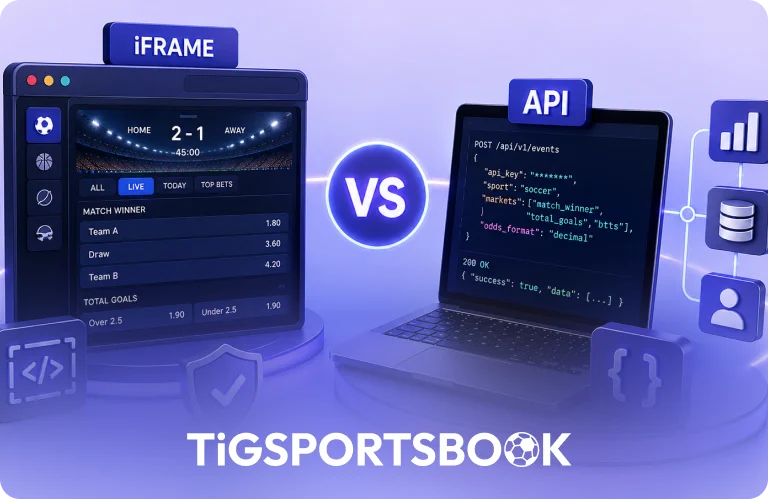
Standalone PAM or PAM API Integration: Which Should You Choose?
| Factor | Standalone PAM Platform | Sportsbook PAM Integration (API) |
|---|
| Best For | Operators building or rebuilding their platform from scratch. | Operators with an existing sportsbook platform upgrading their player management layer. |
| Deployment Model | Complete, pre-integrated Player Account Management (PAM) solution. | Connects a PAM layer to an existing platform via APIs. |
| Core Capabilities | - Player lifecycle management
- Multi-wallets
- KYC/AML
- Fraud detection
- CRM
- Compliance
| Existing sportsbook enhanced with centralized player management and compliance features. |
| Infrastructure Requirement | New PAM deployment with integrated modules. | Retains existing sportsbook infrastructure. |
| Migration Approach | Fresh deployment. | Parallel run with the existing system to minimize go-live risk. |
| Ideal Use Case | Launching a new sportsbook or replacing legacy player management. | Modernizing player account management without replacing the sportsbook platform. |
Problems a Fully Integrated Sportsbook PAM Solves
A fragmented player management stack doesn’t just create operational friction. It creates compounding risk across compliance, revenue, and player trust.
Operators running without a unified PAM consistently run into the same five failure points:
- Blind Spots in Player Behavior: Shared IPs, staking velocity spikes, failed payment clustering, and multi-account signals go undetected without a centralized monitoring layer. This leads to unmanaged fraud and AML exposure.
- Siloed Analytics: Without a single data environment, operators can’t reliably track sportsbook odds, player performance, player segment behavior, and other parameters. This makes acquisition decisions based on incomplete pictures.
- Bonus Tools Without Behavioral Triggers: Most operators have promotion capability but lack the real-time player data needed to activate offers based on actual behavior rather than scheduled calendar logic.
- Compliance Overhead: Regulatory reporting built on manual processes or disconnected tools drains operational resources and creates audit exposure that no operator can afford in a licensed market.
- Integration Debt: When PAM, CMS, CRM, and analytics live in separate systems, every change requires multi-system coordination. This slows down time-to-market and increases infrastructure cost per update.
Who Needs a Sportsbook PAM?
The honest answer is any operator running a compliant, scalable sports betting platform. But the need looks different depending on where an operator is in their build.
- White label operators who want control over compliance configuration, wallet management, and player data without requiring a full platform rebuild.
- Operators migrating off a legacy PAM.
- Multi-market operators need a PAM that supports multiple brands and jurisdictions from a single system.
What to Look for in a Sportsbook PAM Provider?
There are four criteria that should anchor any vendor evaluation.
- Built Only for Sportsbook: Confirm the PAM was built on sportsbook operational logic and not adapted from casino infrastructure. Ask specifically how the system handles in-play session events and concurrent live-event wallet reconciliation.
- Jurisdiction-Specific Compliance Engine: Verify that the compliance engine supports your target jurisdictions natively, with jurisdiction-specific rule sets that can be configured independently rather than approximated through a global policy.
- Able to Handle High Transaction Volume: Assess whether the multi-wallet architecture can handle live-event transaction volumes without reconciliation lag. Request specifics on how the system performs under concurrent bet settlement at scale.
Moreover, confirm that the API layer has documented connectors for the KYC vendors, payment gateways, and odds feed platforms your operation requires.
Custom connector builds for every integration add timeline and technical risk that a well-integrated PAM should eliminate.
Conclusion
A sportsbook PAM isn’t a back-office add-on but a system that determines whether a sports betting platform can onboard players cleanly, enforce compliance continuously, process transactions accurately at scale, and retain players through data-driven engagement.
Operators who treat PAM selection as an afterthought typically pay for it twice: once in operational overhead, fixing what the system can’t do, and again when a compliance gap surfaces in an audit.
TIGSportsbook’s Player Account Management software is built specifically for sportsbook operations covering the full player lifecycle, multi-wallet architecture, KYC and AML compliance, fraud detection, and CRM tooling in a single system. Book a demo to see it in action!
Power Your Sportsbook With Modern PAM