For operators looking for a faster way to enter the iGaming market, there are two options: a ready-to-use software solution or a pay per head sportsbook software solution. Operators often turn to pay-per-head software. Why?
As compared to a custom software (that takes months of development) and a white-label software (that takes 2 to 4 weeks to launch), a PPH sportsbook software is a service model that can go live in 24 hours. In this model, operators pay a weekly fee per active player to access a fully managed betting platform.
The software provider handles the technology, odds feeds, line management, grading, and platform maintenance. The operator focuses on acquiring players, managing settlements, and growing the business.
This PPH sportsbook guide explains how PPH works, what operators actually pay for, how it compares with turnkey and custom sportsbook models, and the key factors to evaluate before choosing a provider.
How the Pay Per Head Model Actually Works (Operator’s View)
The working of a PPH software includes three key parties:
1. The Operator (or agent)
The player is responsible for bringing in players, managing customer relationships, and handling credit or settlement activities.
2. The PPH Provider
The PPH software provider supplies the underlying bookie software, including.
- Odds feeds
- Grading
- Line management
- Platform maintenance
3. The Player
The player places wagers on specific sports events and instances.
Characteristics of PPH Software
- The pay per head sportsbook model typically follows a weekly billing cycle.
- Instead of paying for every registered account, operators are charged a price per player based only on active users who place wagers during that week.
- Dormant accounts generally do not generate fees, making the model highly scalable.
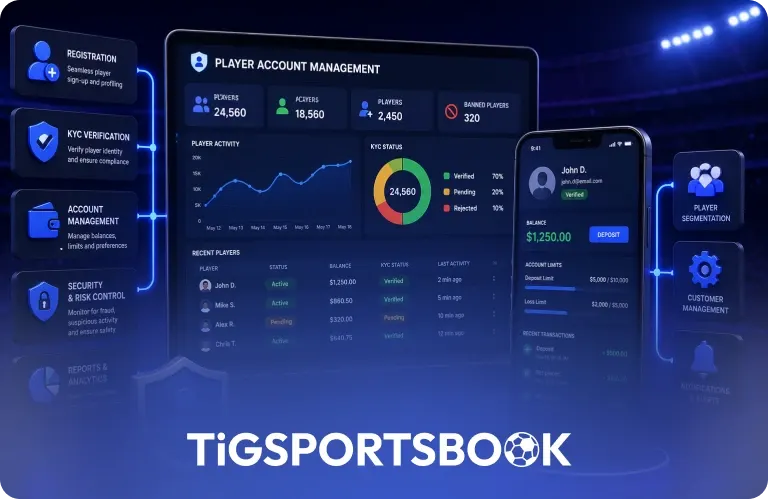
As operations grow, many bookies expand through a hierarchy of agents and sub-agents. Agents oversee player accounts directly, while sub-agents manage their own player groups under the main account. Most PPH platforms provide an agent dashboard to monitor player activity, balances, and weekly handle across the network.
Choose the Right Pay Per Head Sportsbook Solution
PPH Pricing Explained | What You’re Actually Paying For
Though pay per head software offers a cost-effective solution, some operators still have the question: how much does a pay per head sportsbook cost?
In most cases, the PPH pricing ranges from $3 to $25 per active player per week. This cost depends on factors, such as
- Provider’s Market Coverage
- Platform Quality
- Customer Support & Line Management
Note: Under the pay per head pricing model, you only pay for players who place wagers during that billing cycle. For example, if you have 50 registered players but only 20 are active this week, you pay for 20, not 50.
Despite this, operators must not expect to have all the features. Some features, like casino modules, horse racing add-ons, and dedicated account managers, are charged separately.
The key abstract for operators is that a PPH software can save you costs, provided you have a small user base. Industry estimates show that entry-level operators can save 40% to 60% in their first year compared to licensing or building a standalone sportsbook platform from scratch.
Custom vs. PPH vs. Turnkey Sportsbook | Which Model Fits Your Stage?
The choice of the sportsbook software depends on the goals, budget, and timeline of the business. Here is a quick comparison of three software models.
| Factor | PPH Sportsbook | Turnkey Sportsbook | Custom Sportsbook |
|---|
| Launch Time | 24 to 72 hours | 2 to 8 weeks | 3 to 12 months |
| Upfront Cost | Minimal | Moderate | High |
| Ownership | None (Leased) | Partial | Full |
| Best For | Agents, independent bookies | Regional operators | Enterprise and licensed operators |
| Technical Responsibility | Provider | Shared between provider and operator | Operator |
| Customization | Limited | Moderate | Extensive |
| Scalability | Good for early-stage growth | High | Highest |
| Regulatory Flexibility | Limited | Moderate | High |
| Maintenance & Updates | Managed by the provider | Shared responsibility | Fully managed by the operator |
| Time to Revenue | Fastest | Moderate | Slowest |
A PPH sportsbook is often the fastest & most affordable option for agents and bookies who already have a player base and want to start taking bets quickly.
A turnkey sportsbook offers greater branding and operational control while still relying on a provider for key infrastructure.
A custom sportsbook build delivers maximum ownership, customization, & long-term flexibility but requires significant investment, technical resources, and ongoing maintenance.
Important Query: Despite asking which model is the best, operators should ask which model best matches their budget, growth plans, compliance needs, & control level.
The 5 Operational Pillars Every PPH Operator Must Control
While the sportsbook provider offers the technology, how profitable a pay per head sportsbook is depends on the operator. The management of risk, players, and exposure is the key decision-maker.
1. Line Management & Sharp Action
Monitor line movement closely and understand why odds are shifting. If you blindly follow every market move or steam chasing, it can expose your book to unnecessary risk. Successful operators know when to follow the market and when to hold their position.
2. Player Limit Controls
Default wagering limits are rarely optimal. Set betting limits based on player behavior, betting history, and risk profile. Recreational players and sharp bettors should not always receive the same limits, as it can be a liability.
3. Credit vs. Cash Models
Credit sportsbooks can drive volume but introduce collection and settlement risk. Cash and crypto models reduce exposure because funds are secured before wagers are placed.
4. Agent Network Integrity
Sub-agent structures help scale a sportsbook operation, but they also create layered liability. There are several parameters that should be enforced consistently across the entire network, such as
- Betting limits
- Settlement rules
- Risk controls
5. Layoff Account Strategy
When action becomes heavily one-sided, a layoff account can help hedge liability with another bookmaker. When it is used strategically, it protects the sportsbook from outsized losses on a single outcome.
Mastering these operational pillars often has a greater impact on long-term profitability than simply choosing the best PPH sportsbook software.
Common PPH Operator Mistakes (and How to Avoid Them)
The success of a pay per head sportsbook depends significantly on the fundamentals of sportsbook management. Here are some management mistakes that operators must avoid.
1. Choosing a provider based on price alone
Keep in mind that some of the low-cost PPH services may come with stale odds, limited market coverage, or support gaps. This can hurt profitability & player retention.
2. Treating player accounts as profiles instead of financial ledgers
Poor credit liability management can be a risk. For operators, it can create settlement issues & expose operators to unnecessary financial risk.
3. Failing to classify player types early
Applying the same limits to recreational and sharp bettors can lead to disproportionate exposure and reduced hold percentages.
4. Relying on default platform settings
Generic betting limits and market rules rarely fit every operation, increasing risk and limiting control over sportsbook performance.
5. Scaling player volume before enforcing settlement discipline
Rapid growth without consistent collection and payout processes can quickly create cash flow and liability problems.
What to Demand From Your PPH Provider Before You Sign?
PPH sportsbook operators must evaluate potential partners against the following checklist before signing any agreement:
- Transparent per-head pricing with no hidden setup, maintenance, or module fees.
- Documented uptime SLA with 99.9%+ availability.
- Real-time odds feeds sourced from sharp market makers.
- Native sub-agent and multi-tier management for scalable sportsbook operations
- Automated grading and fast settlement processing to reduce manual workload
- 24/7 live support is available when issues arise.
- Mobile-first betting experience.
- Crypto and multi-currency settlement options.
Is PPH Right for You in 2026?
As an expert, I can say that a pay per head sportsbook is not the right solution for every operator.
Case 1: If you already have a player base or agent network but lack the technology to run a sportsbook, you can choose PPH. It is the fastest and most cost-effective path to market.
Case 2: If you are testing a new region or betting niche before making a larger investment, the PPH model can serve as a low-risk proof of concept.
However, if you seek complete brand ownership, full data control, & extensive customization, you may find a turnkey or custom sportsbook more suitable.
Moreover, enterprise operators with complex licensing, compliance, and reporting requirements may need infrastructure beyond what a standard PPH sportsbook can provide.
Conclusion
A successful pay per head sportsbook operation depends on more than low pricing or fast deployment. PPH is an infrastructure decision that affects risk management, player experience, and long-term profitability.
The provider you choose can influence your hold percentage just as much as the quality of your player base. Most importantly, disciplined configuration through effective limits, settlement processes, & risk controls often matters more than platform features alone.
Ready to evaluate a platform built for serious sportsbook operators? Explore TIG Sportsbook’s Pay Per Head Sportsbook Software solution to learn more.
Start Your Pay Per Head Sportsbook Today